Time for Change
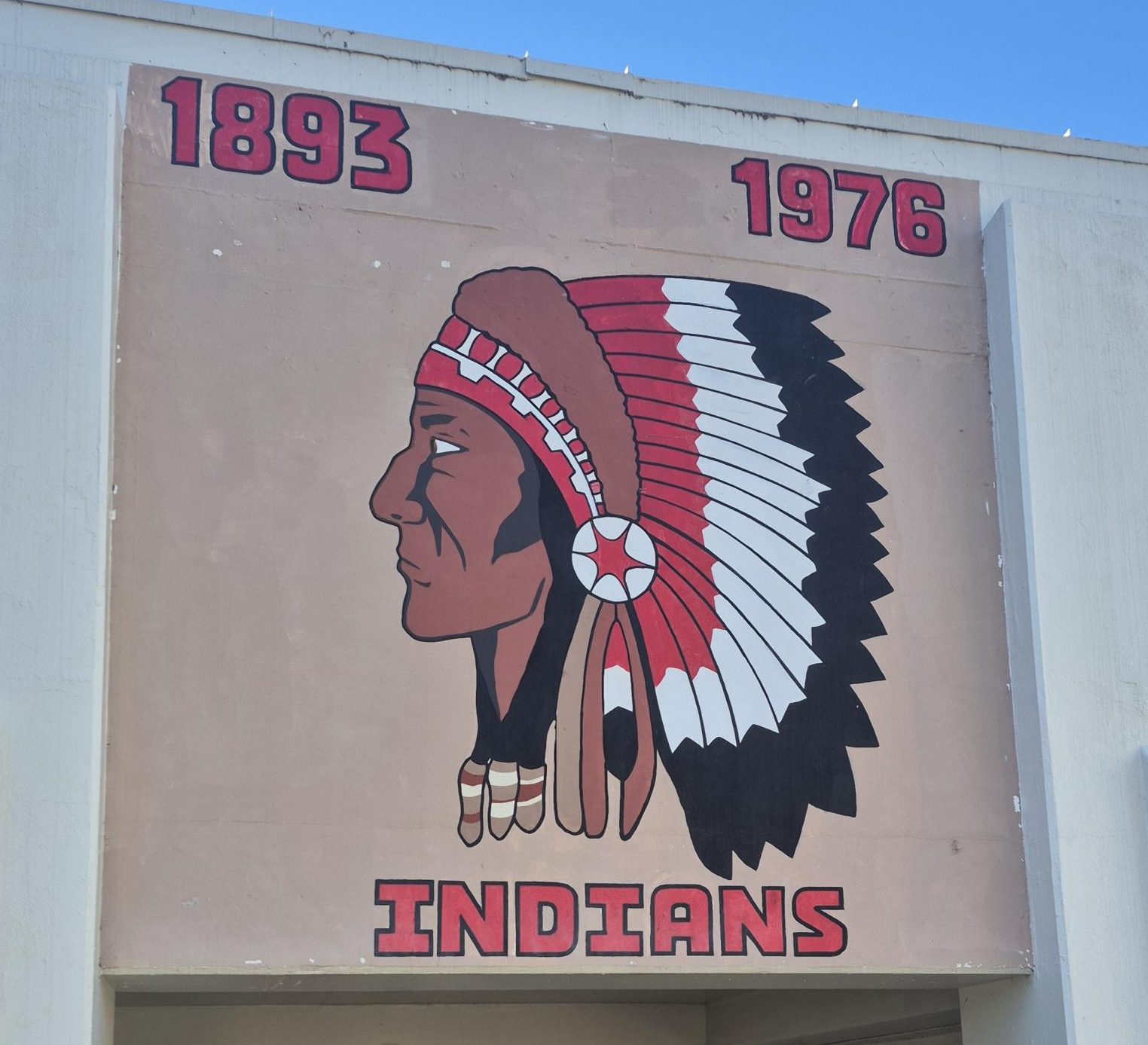
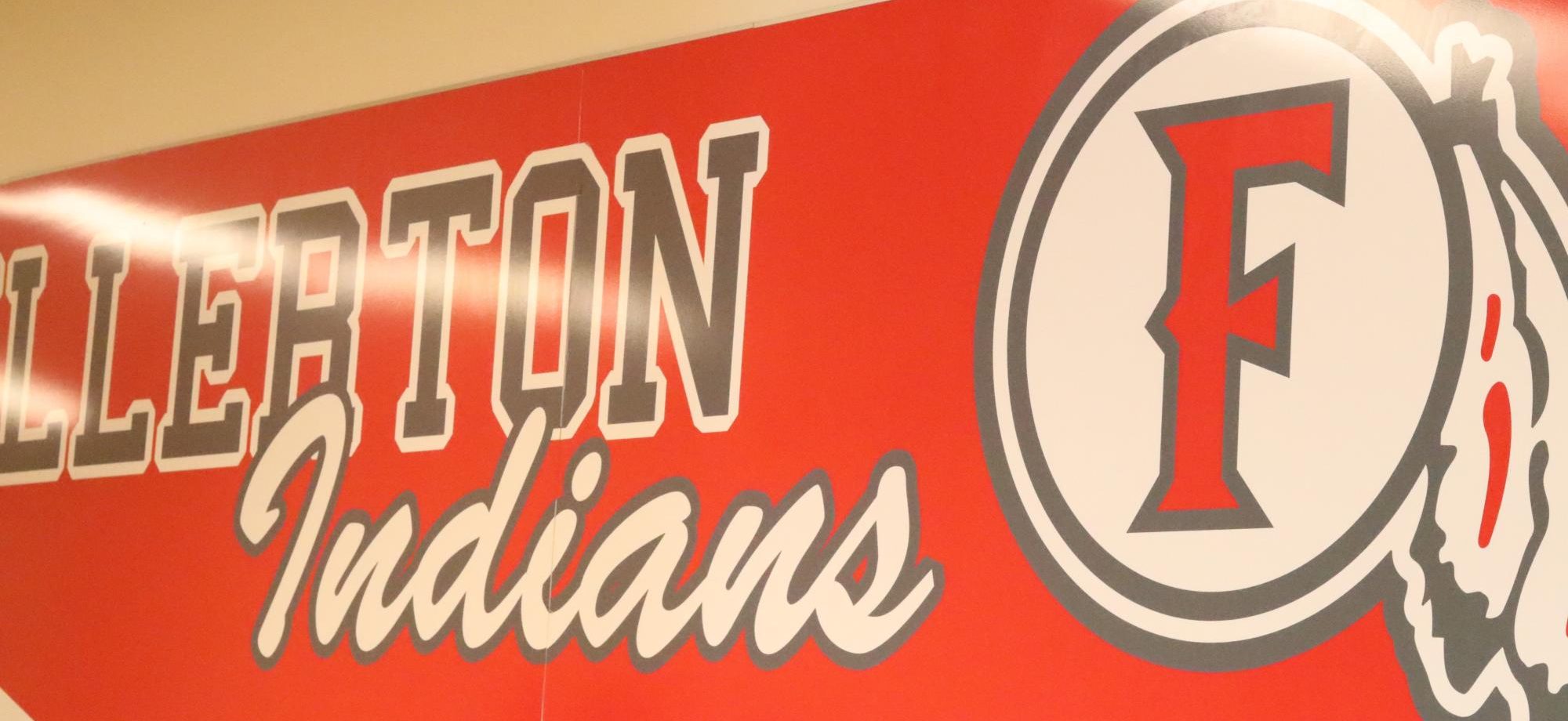
Fullerton Union High School was built in 1893 without a mascot. But 32 years later in 1925, the “Indian” was selected and the imagery has been tied to the school ever since.
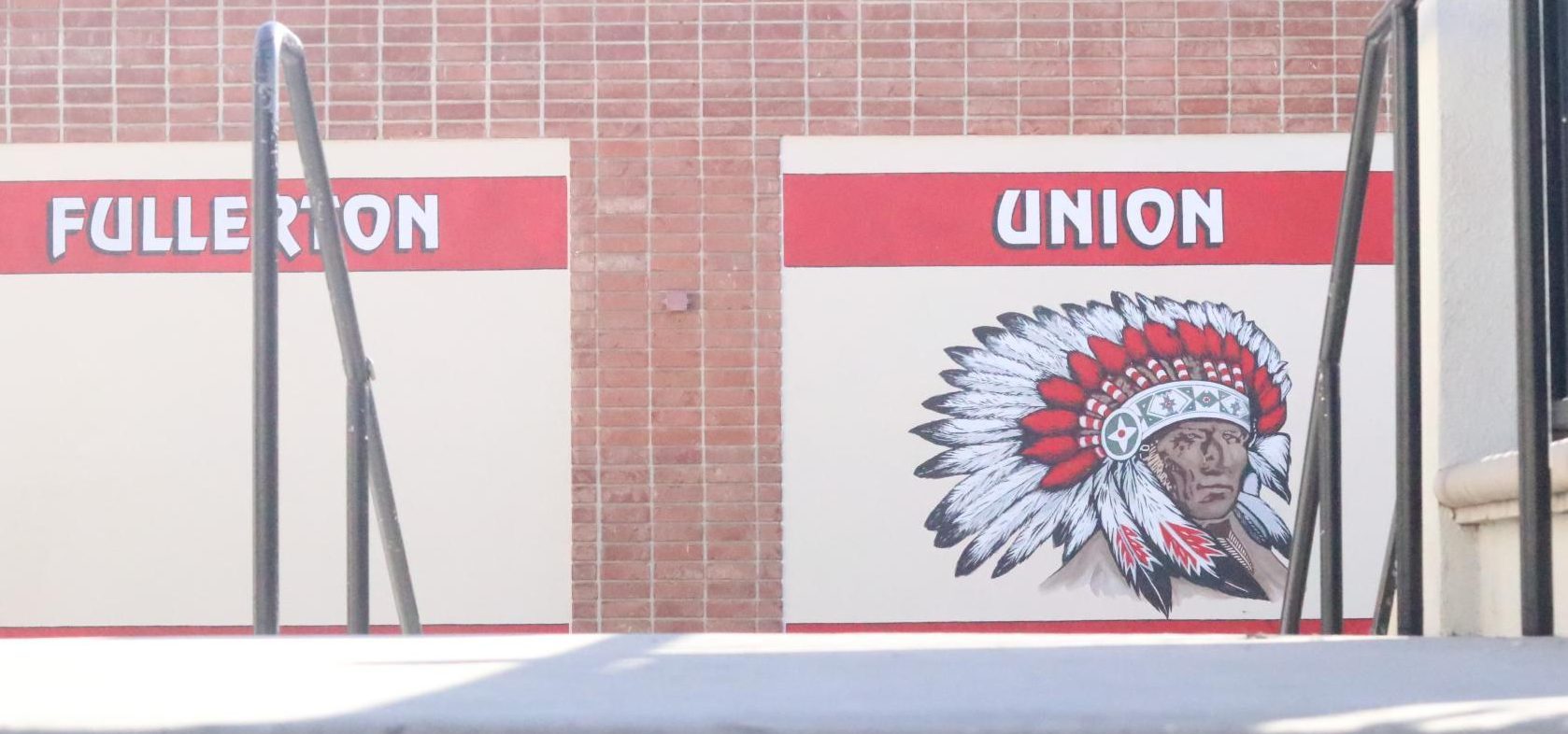
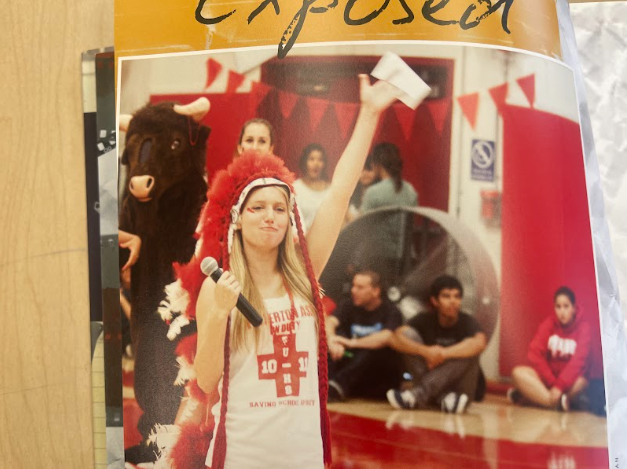
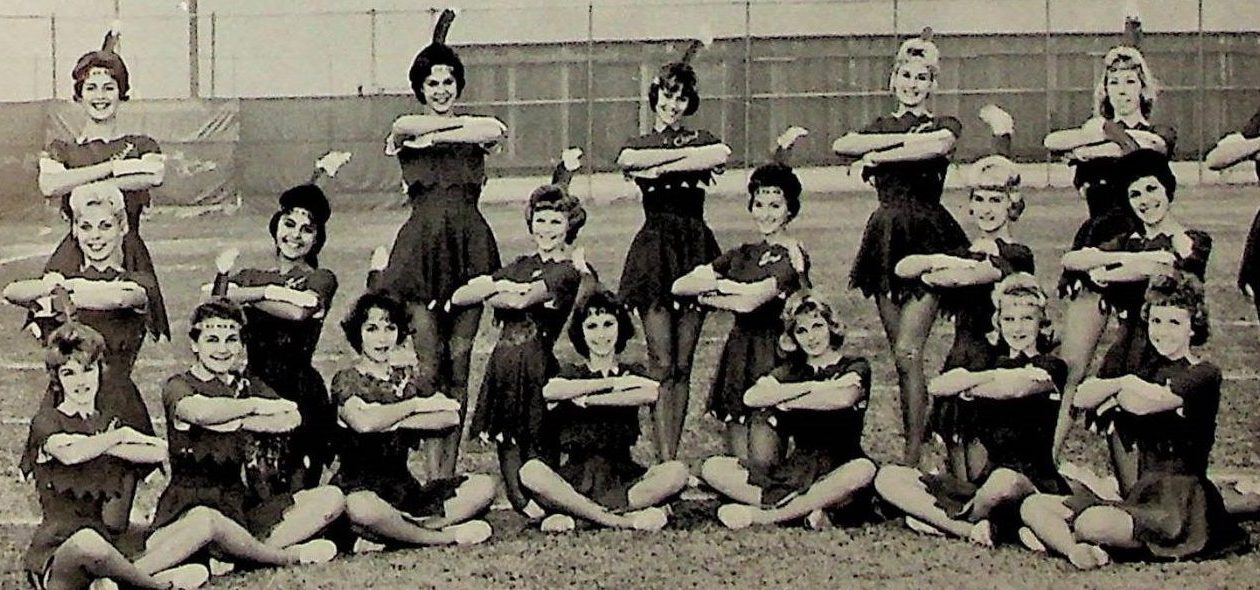
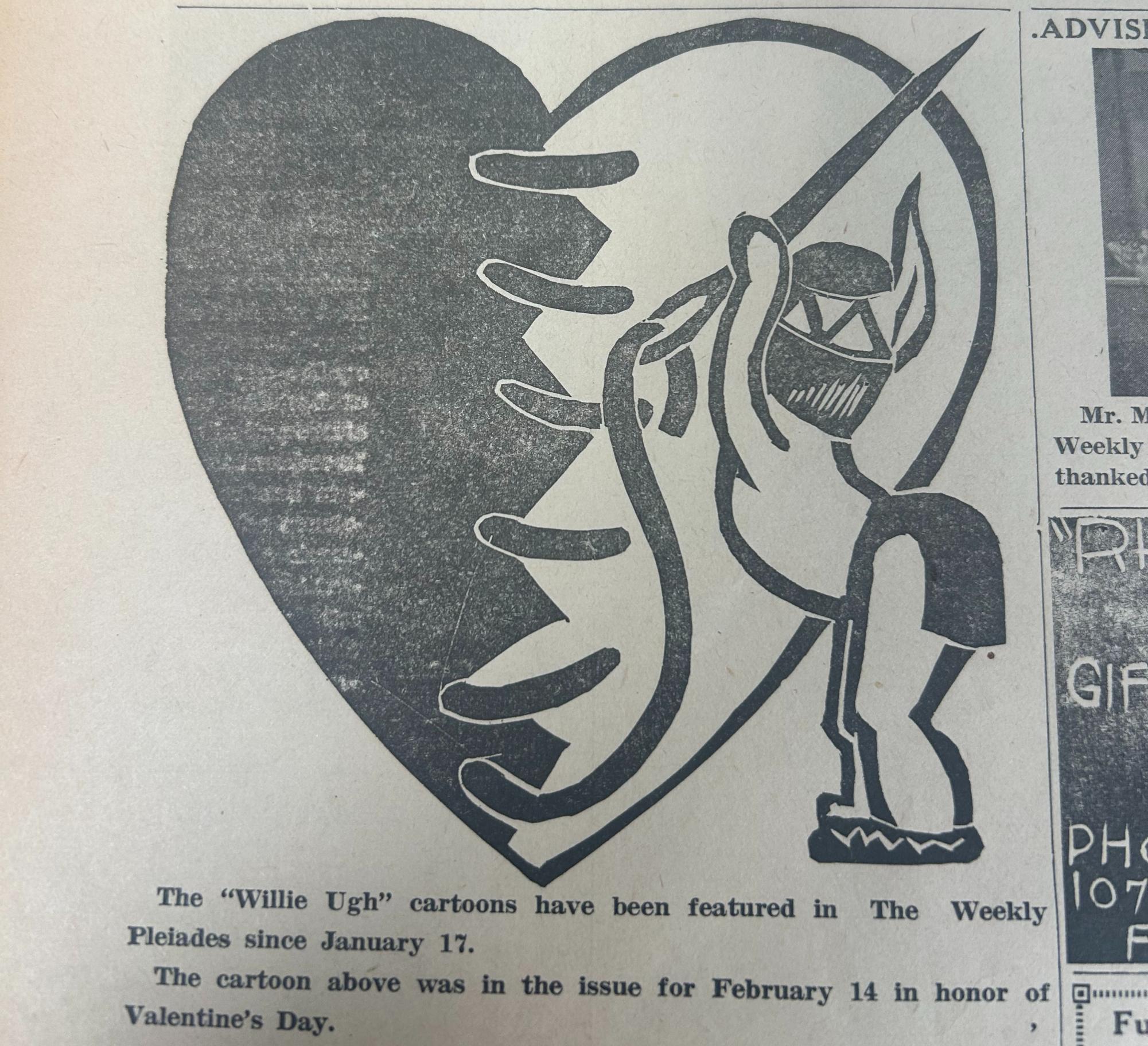
There are several images around campus showing the Indian mascot, including two large murals. Some sports uniforms and merch displayed Indian caricatures and symbols as late as 2010. The former drill team known as the Featherettes imitated native culture with their costumes, props and dances. There was “Willie Ugh,” a student dressed as a stereotypical Native American who cheered Fullerton on at football games until protestors pushed for his retirement in 2001.
To avoid disrespecting Native Americans, school officials have prohibited students from dressing up as an Indian mascot since 2002. In 2010, students voted to adopt a buffalo spirit animal to promote school spirit, but there was not enough campus enthusiasm for the new symbol to create a tradition.
The school wasn’t alone in using the Indian mascot. Americans have been using Native Americans as mascots since the colonial period and continued on to the modern day. There were fraternal organizations (Improved Order of Red Men, who still exist) to youth groups (the Boy Scouts’ the Order of the Arrow, who still use some Native American terms). There were college and professional sports teams (the Cleveland Indians, who changed to the Guardians in 2021 and the Washington Redskins, who changed to the Commanders in 2020).
These mascots were adopted as the government actively attempted to eradicate native culture. The United States wiped out populations that were already greatly diminished due to diseases through warfare and genocide, as in the case of the Sand Creek Massacre. Government officials forcibly removed tribes as they expanded, most famously through the Trail of Tears. They attempted to assimilate native people by kidnapping their children and taking them to boarding schools intended to “whiten” them. These are just a few of many injustices natives have faced.
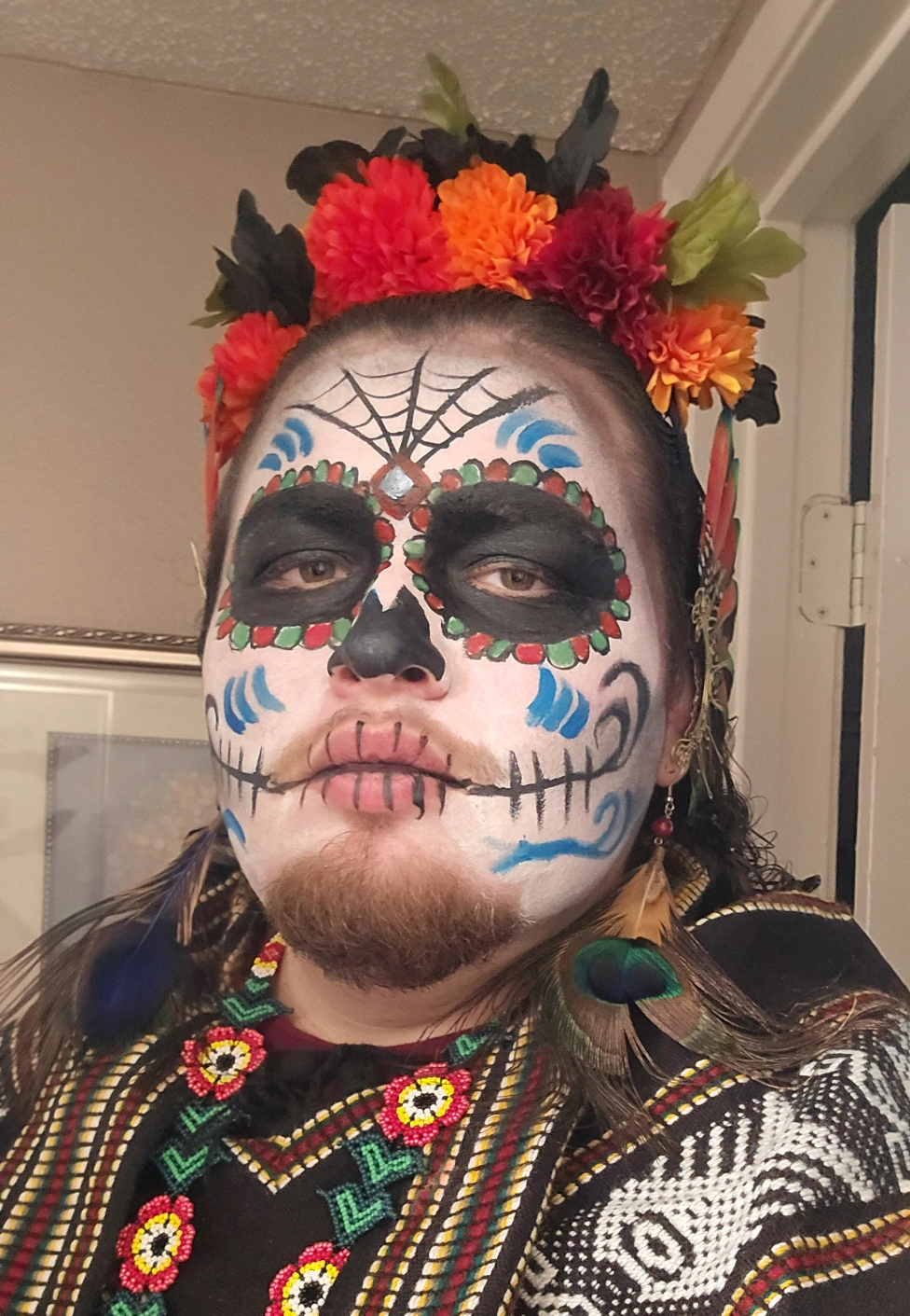
Alum Alonzo Diaz, who has a minor in Native Studies from UC Davis, knows the harm of Indian mascots very well.
“If I were to give a lecture of indigenous history, I’m pretty sure a lot of the students would walk out crying because of how heavy and dark this history is and how very little it’s touched upon by history classes,” said Diaz, who graduated from Fullerton in 2021.
Making native people a mascot trivializes their struggle.
Additionally, claiming that the Indian mascot is a representation of Native Americans makes it seem as though they’re a monolith instead of an umbrella category that includes so many diverse groups. There are nearly triple the number of federally recognized tribes than there are countries in the world, and even more that aren’t recognized. As someone of Mayan and Nahuan descent (indigenous communities in Mexico), this was a concern to Diaz when he first saw his high school’s mascot.
“I noticed the mascots, and I wondered, ‘Okay, we’re called the Indians, but are we honoring a specific tribe?’ I did ask around the school if we did honor a specific tribe, and none of the staff could name the local tribes,” Diaz said. “People are just making us indigenous peoples as one group and not all these different, beautiful, diverse cultures.”
Although the school could do more, some faculty have made an effort to respect the local tribes. Performances from the arts programs open with a land acknowledgement, recognizing and honoring the Kizh nation. However, FUHS history classes do not teach specific lessons highlighting the Kizh nation or other local tribes, which was part of Diaz’s concern.
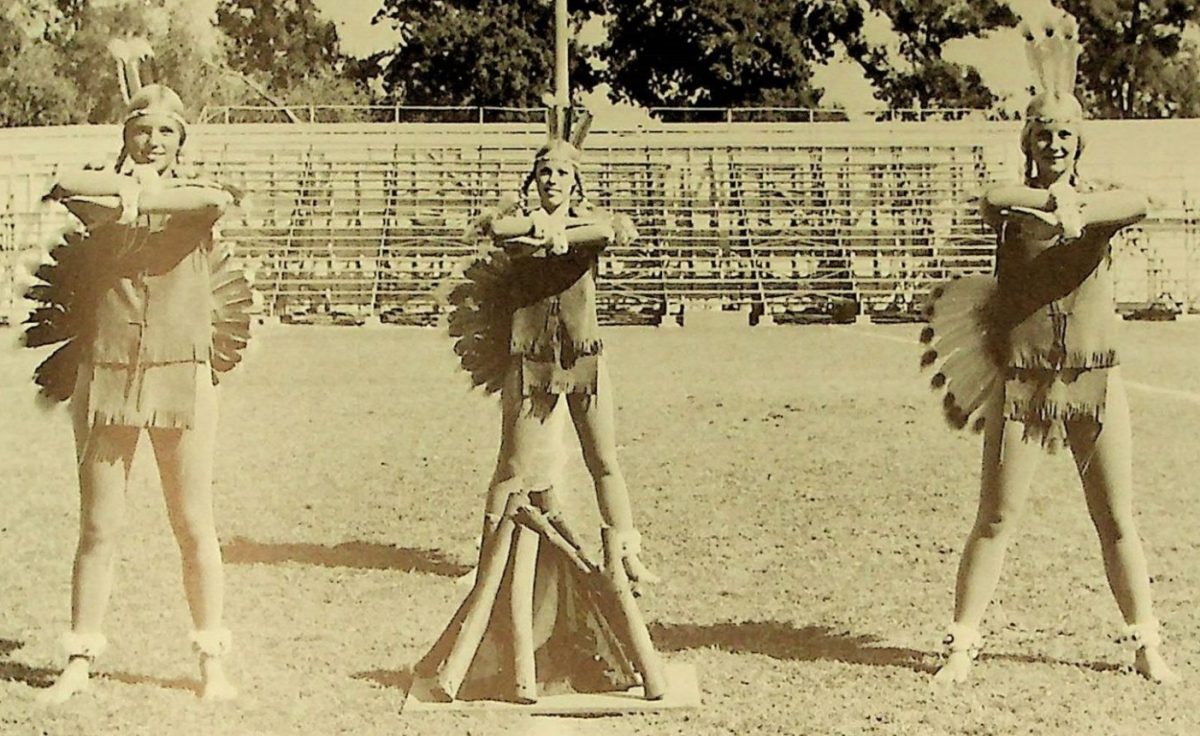
Fullerton Union High School was built on the land of the Kizh or Gabrielino people. Yet, depictions of the mascot look nothing like the people of these tribes.
Instead of the elaborate headdresses depicted in the school murals (something Great Plains tribes wore), they wear simple headbands; the Kizh often have feathers and seashells hanging from them. They didn’t live in teepees as suggested by the props of the former FUHS Cherokee Dancers; they lived in dome-like houses.
According to parent Lindsay Braun, the damage of Indian mascots and the way they generalize and dehumanize people can be seen concretely in studies. Braun was a legislative assistant to Washington State Senator John McCoy, a Tulalip Tribes leader and one of the longest-serving Native legislators in Washington State history.
“There have been many studies done dating back to the seventies on why using generalized stereotypes of any group of people is harmful,” Braun said. “When you make a generalized statement like, ‘oh, this is what a Native American is,’ and then use it as a mascot that can be very disempowering. This wouldn’t feel the same to everyone within a group, certainly. It’s varied. But the point is that a group of people shouldn’t be making that decision for another group of people.”
Ray Estrella, a Pascua Yaqui person whose mother graduated from Fullerton High School in 1962 stated that he has no problem with the word “Indian.” However, even he has concerns about derogatory mascots.
“It bothers me when they do the mascots wrong or when they don’t portray them right,” Estrella said. “Or they take a drum out there or they start singing songs, do the chop. Like, c’mon, you don’t do that. Call somebody in [who’s an actual native], they’ll do it for you.”
The most revealing fact is that when the school asked local tribes for permission to continue using the Indian mascot, all the tribes said no.
And that’s no surprise. Native activists have been pushing back against these mascots.
The National Congress of American Indians (NCAI), the oldest and largest organization representing Native Americans, has repeatedly condemned Native American mascots since 1950. The National Association for the Advancement of Colored People (NAACP) has been formally opposed to them since 1992. The American Psychological Association (APA) made a statement calling for schools to retire Native American mascots in 2005.
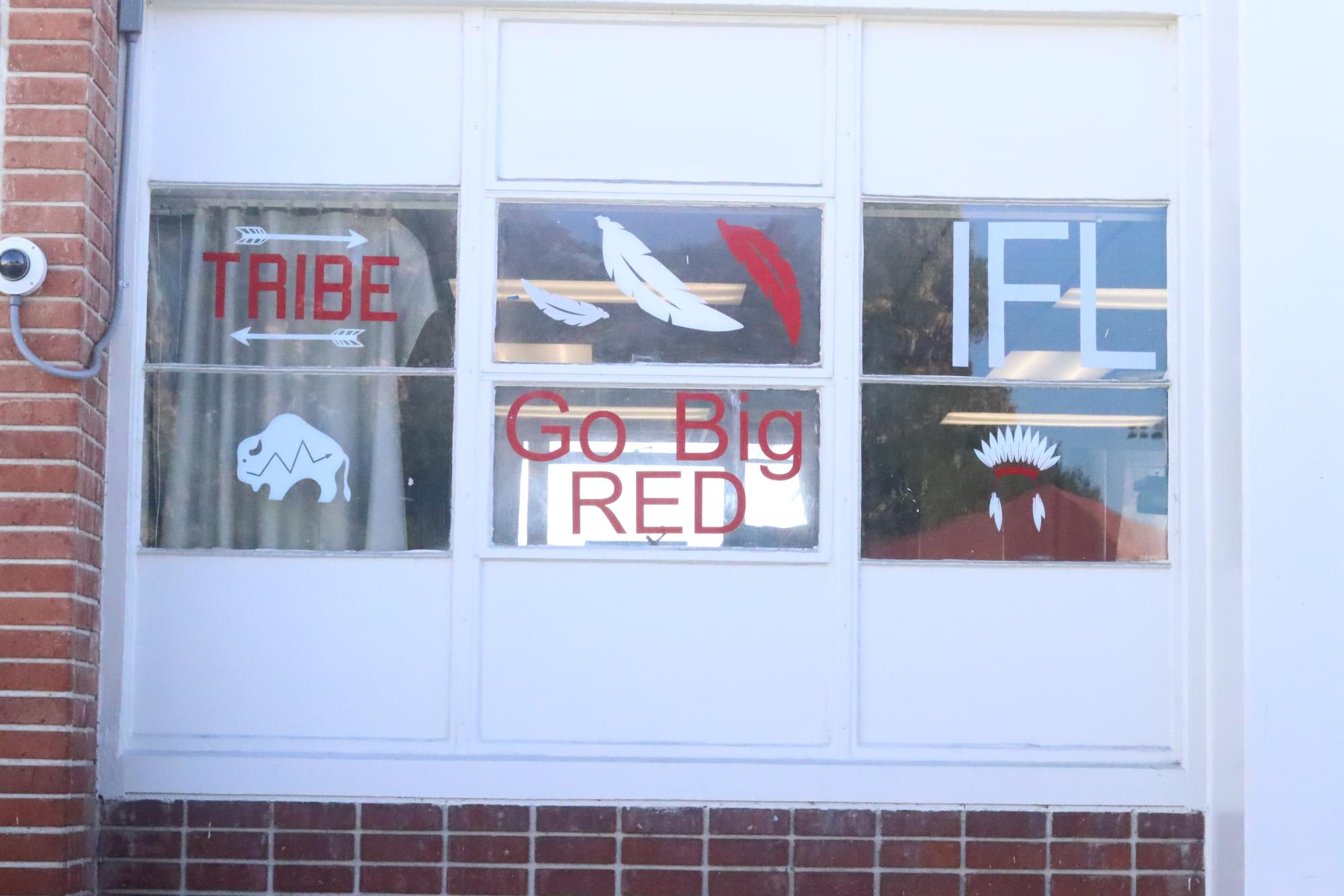
Fullerton High School itself has faced a lot of criticism for the Indian mascot since the turn of the millennium.
Former representative of the American Indian Movement Daniel Chapin wrote a letter to FUHS school officials in November 2001 complaining about the mascot according to the Los Angeles Times. Then they reported on a protest about the mascot during a school board meeting on June 18, 2002.
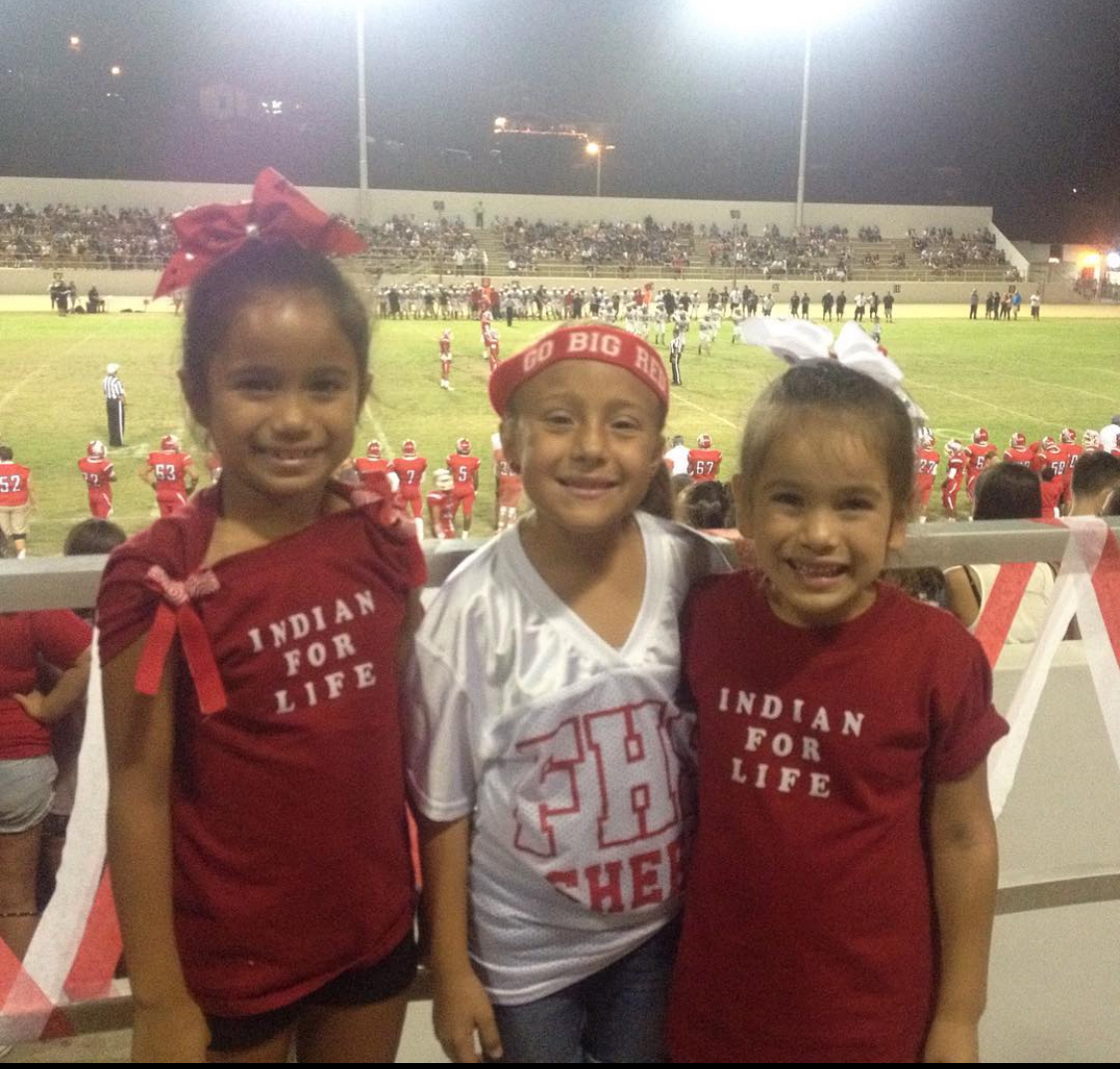
As a result, the school has slowly backed away from the Indian mascot. Willie Ugh was retired following Chapin’s letter in 2001. They voted on the Buffalo as “spirit mascot” in 2010 while still maintaining the original Indian mascot. In recent years “Tribe Pride” has been more prominent than “Indian for Life.” Even then, many programs have already phased out the mascot entirely, according to ASB vice president Audrina Gomez.
“Honestly, I feel like a lot of our students don’t even know our mascot,” she said. “Most programs don’t use Indian, most programs don’t even use Tribe anymore.”
Now, the California Racial Mascots Act (passed in 2015 to ban “Redskins” as a mascot) has been amended to include other “derogatory terms,” including both “Indian” and “Tribe.” The school now must officially change its mascot by July 2026.
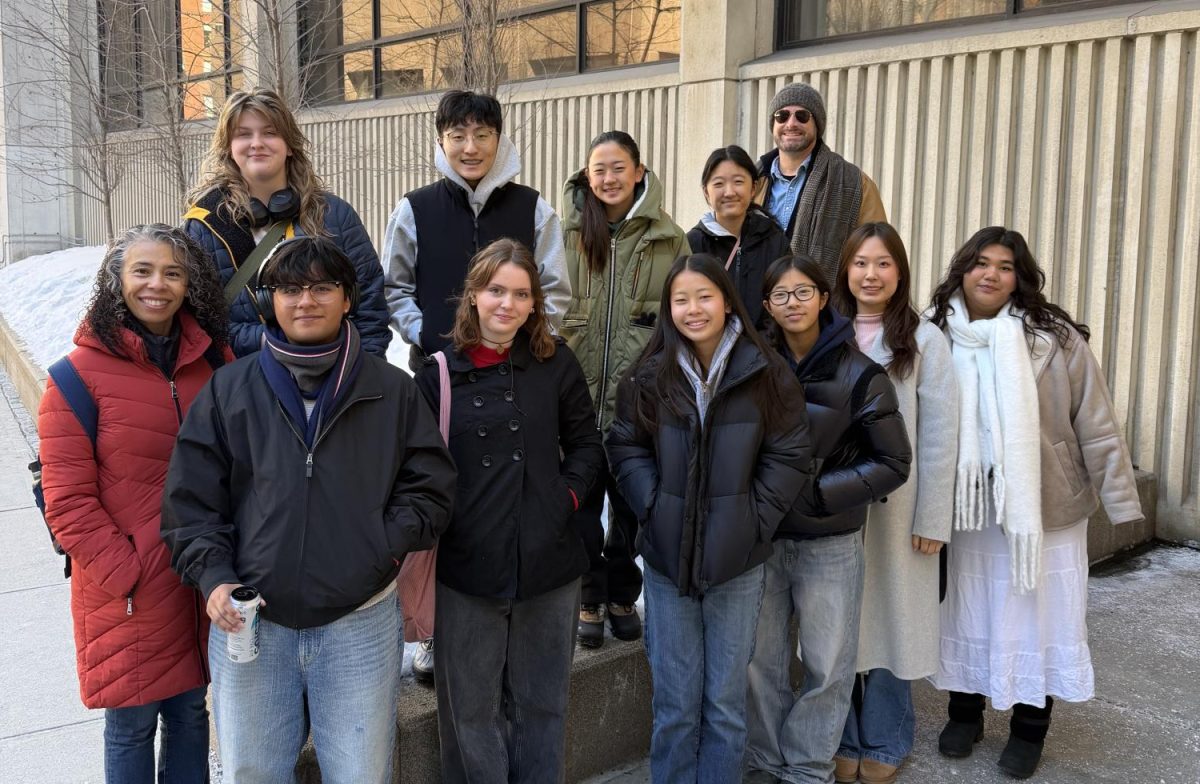
Along with hosting community meetings in October and November, Caffrey formed a 16-member Community Action Council to guide the process of selecting a new mascot.
The group includes principal Jon Caffrey; head counselor and FUHS parent Erin Defries; English teacher and FUHS parent Cindy Ortiz; social studies department chair and alumni Katy Wren; principal secretary and alumni Benigna Rodriguez; head custodian and alumni Jimmy Crouch; performing arts technical lead and parent Evan Shirk; community member and future FUHS parent Jody Vallejo; parent Lindsay Braun; parent Keiko Suda; senior Audrina Gomez; senior Aimee Reger; senior Alejandro Thompson; junior Jesalyn Perez; sophomore Daisy Coulter and freshman Jude Chappell.
Senior Alejandro Thompson has wanted to change the mascot since freshman year.
“I had been wanting to advocate for change about the mascot since it was kind of ridiculous that we still had a stereotype as our mascot,” he said. “From an outsider’s perspective, it’s very concerning, seeing as it’s a whole race that is being used as a mascot and then you can see it used against other mascots that are animals.”
Gomez, another student on the Council, said she wants to see a mascot that can be proudly seen cheering on sports teams and dancing at pep rallies, something that the school hasn’t had since 2001.
“I feel like having a mascot and making posters and putting it on banners and stuff like that will totally increase our school spirit, especially at football games.”
Gomez is a legacy student with a grandma and parents who attended the school. She grew up coming to football games and even has a shirt that says “Indian for Life” from eight years ago, but even so she understands why the mascot needs to change.
“I feel that it’s okay that we’re letting go of this mascot, and I think Fullerton needs something new.”
Some members of the Council want to educate the students and community on the benefits of changing the mascot, according to Council member Jody Vallejo.
“I think that what some people might think is opposition about the mascot change might actually just be confusion or a lack of understanding,” she said. “And so that’s one of the things we need to try to make people understand.”
However, so far, a lot of the rhetoric from the school merely explains that it is a law and they have no choice rather than trying to justify it. This is something Thompson wants to change.
“There should be more rhetoric that would say, we are happy about this change and that we are, we’ve been waiting for this change to happen and we are ready to go for it,” Thompson said.
As the mascot is being retired, Diaz says that there should still be education about the local tribes.
He says that one effective method of education would be to incorporate it in the classroom somehow.
According to Diaz, he had a friend from the Native studies department at UC Davis who went to a Northern California school with a animal that was important to local tribes as a mascot. The school worked in tandem with a local reservation, and for a few weeks, the history classes would conduct lectures about the tribe.
“They even brought in local tribes and elders to show ceremonies, dances, the language, all these things, how to decolonize your mindset, how to decolonize your life,” Diaz said. “And that, I think, is what Fullerton should attempt to do.”