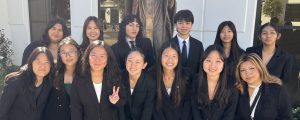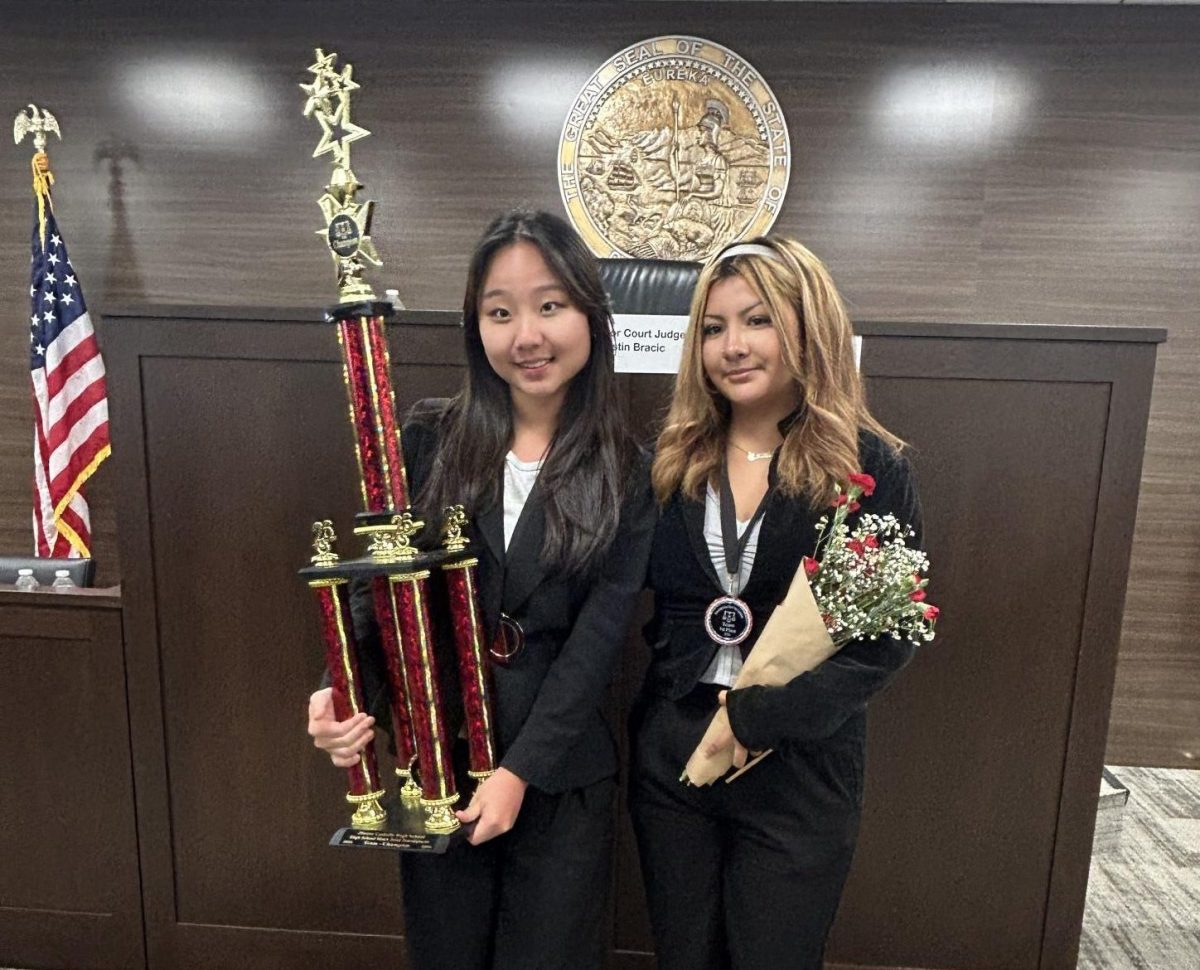
Fullerton High School is fairly new to the world of Mock Trial. Last year was the school’s first time joining the competition. So it’s quite impressive that the team discovered the formula for success so quickly and captured first place in the JSerra Mock Trial Tournament.
Despite being a Year 2 school, the team defeated Troy High School in a closely contested final round while also securing wins over Sunny Hills, Rancho Santa Margarita, and Mater Dei, last year’s tournament champion.
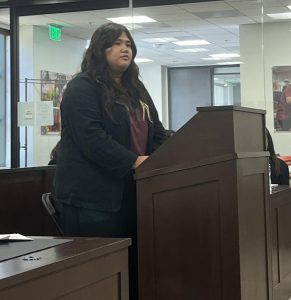
Earlier this fall, the team finished league play 3-1 and ranked among the top 16 out of 52 schools, marking an impressive achievement in the Constitutional Rights Foundation of Orange County (CRF-OC) tournament.
Mock Trial is a club where students simulate courtroom trials by acting as attorneys, witnesses, and bailiffs. Competitors argue cases, question witnesses, make objections, and stay in character under pressure in front of a real judge or attorney, scoring individuals and teams based on their performance. Students are also responsible for analyzing case packets and developing their own strategies, combining public speaking, critical thinking, and teamwork.
Despite the team’s success, the season came with several challenges. Even as a relatively new club, FUHS competes against schools with years of experience, larger rosters, and greater financial support. The team also lacks permanent attorney coaches and only had attorney coaches during the CRF-OC tournament. Funding has also been an ongoing obstacle, with senior president Jane Kwak and vice president junior Olivia Woo personally working to cover major tournament fees.
“There were a lot of times when we needed more funding,” Woo said. “A lot of schools we compete against are much bigger programs, but we still found ways to compete with them.”
The challenges were especially hard during the semi-final round. “Because many members had already committed to taking the SAT, the team faced a major scheduling conflict and had to formally request changes to their competition time,” Kwak said.
After coordinating with tournament organizers and their opponent, the team moved their round to the afternoon so students could compete after finishing their exams. Even then, limited attendance forced members to step into multiple roles.
“Mock Trial comes with unexpected challenges, so we always need to be prepared in case of any conflicts,” Kwak said.
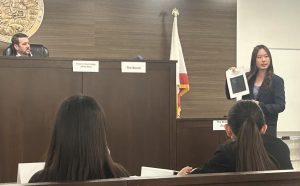
In one instance, Kwak competed as both a pre-trial attorney and a witness to help fill missing positions, both roles requiring deep knowledge of their character. The experience demonstrated the team’s adaptability and willingness to step up for one another during difficult situations.
Woo believes the team’s ability to focus on individual strengths helped them succeed against more established programs.
“Our team feels even better than last year in terms of experience and confidence. We’ve really refined our skills and our ability to work together as a strong team,” Woo said. “We knew that we were disadvantaged in terms of numbers, but we didn’t let that discourage us.”
According to Woo, the team focused on assigning roles based on each member’s strongest skills instead of trying to make everyone excel at every part of the trial.
“We have really good actors, and we knew we had some attorneys who were better at cross examination, some who were better at openings and closings, and some who were really good at objections,” she said. “We leaned into those strengths instead of trying to make everybody perfect at everything.”
Woo also emphasized the importance of team chemistry throughout the season: “We’re all friends on the team, and we know each other very well, so that allows us to be completely honest with each other when we give feedback.”
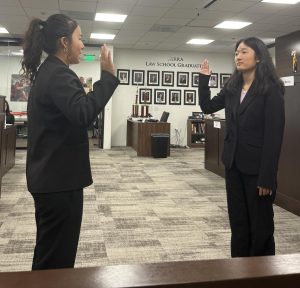
Another factor that distinguished Fullerton from competing teams was preparation. Woo explained that while many teams may have talented speakers or performers, understanding the case thoroughly often determines success. “What separates good teams from bad teams is knowing the case and knowing objections,” she said. “We know a lot of objections.”
This season’s JSerra case centered around the fictional case of Dana Walker, a woman accused of murdering her boss after allegedly embezzling money from him. Students spent weeks studying witness statements, evidence, and legal arguments in order to build their cases. Earlier in the year, the team also competed in a more unique cooking show themed case involving characters Haley Fromholz and Chef Sears, which required students to think creatively while still presenting convincing legal arguments.
For junior Molly Kim, who portrays a prosecution witness, the role requires quick thinking and a deep understanding of her character, Carrie Moore. Witnesses must respond carefully during cross examination while staying consistent with their role.
As a witness, Kim fully embodies her character, responding as she believes Carrie Moore would if she were truly being questioned in a real trial. “The whole role is to basically not give the other attorneys what they want to hear,” Kim said.
Kim also participates in Speech and Debate, where she recently placed first in Dramatic Interpretation at an OCSL tournament. She explained that the skills from both activities often overlap. “When you study and practice for one, you’re kind of studying for the other. The delivery and intonation all overlap,” Kim said.
Her success in Speech and Mock Trial comes from fully embodying her character rather than fulfilling a simple role. “It’s not acting as a character, but actually becoming the character,” Kim said.