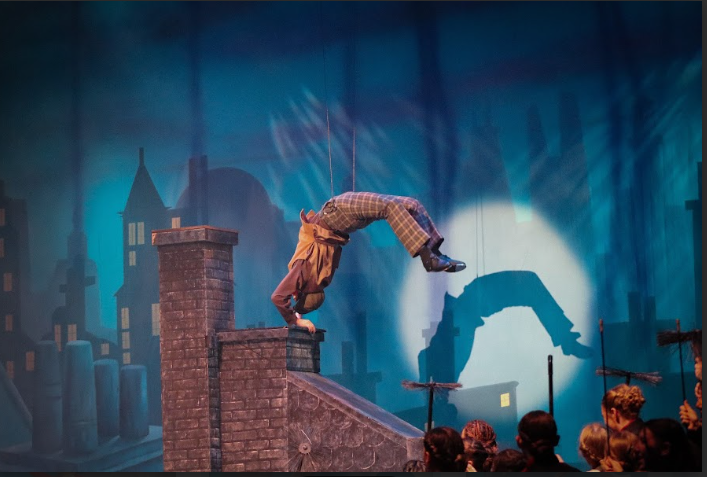
A team of 23 actors and 42 behind-the-scenes creatives and crew members have transformed the FUHS Little Theatre into an enchanted forest with glowing fairies and Shakespearean chaos for the fall production of A Midsummer Night’s Dream. What looks like pure magic on stage was actually built from months of planning, problem solving, creativity and late-night work from both cast and crew.
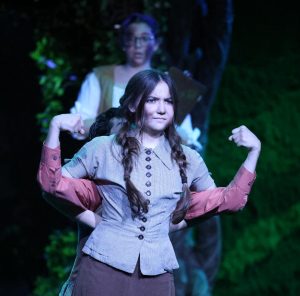
The comedy follows four young lovers and a mischievous fairy world that twists everything into confusion, humor and magic. Hermia, played by senior Andromeda Bruschke, and Lysander, played by sophomore Jacob Thompson, fight for their love while handling pressure from Athens’ strict society.
Meanwhile, Helena, portrayed by senior Kayla McVicar, chases after Demetrius, played by senior Nolan Sudduth, who is determined not to return her affection. As the lovers flee to the forest, they fall under the influence of love potions that lead to comedic love triangles.
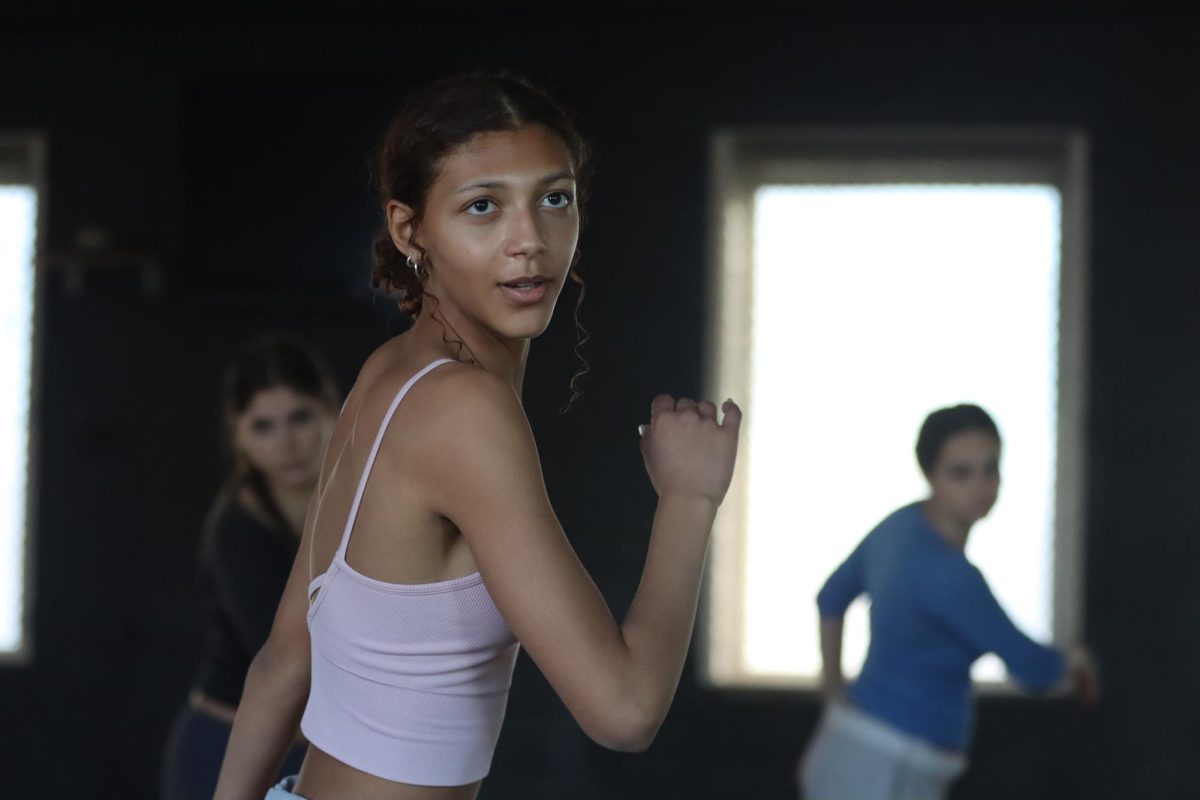
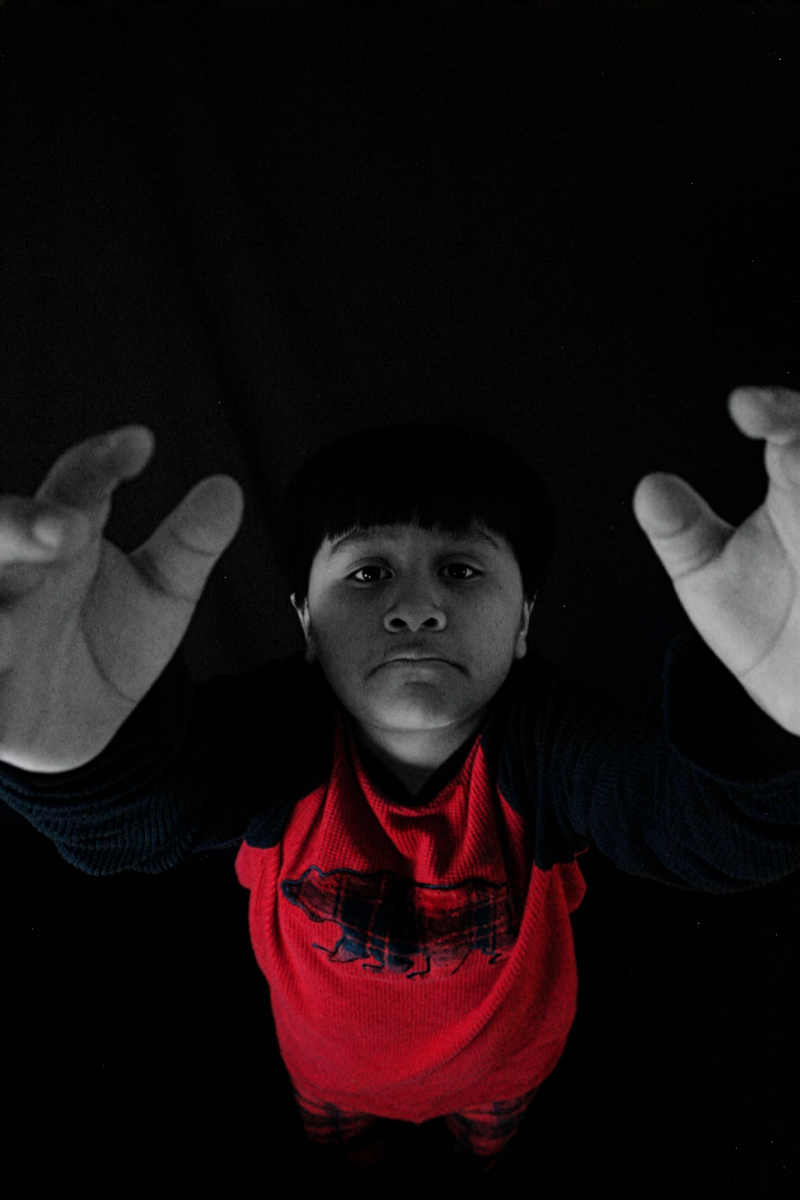
Junior Adnan Khan Fahim, who plays Theseus, said that even though Shakespeare’s words are very hard to understand at first, the actors must perform with confidence.
“Your job as an actor is to make sure that the audience believes that you do know all of the words,” Fahim said. “Focus on the meaning you’re trying to convey, not the words themselves.”
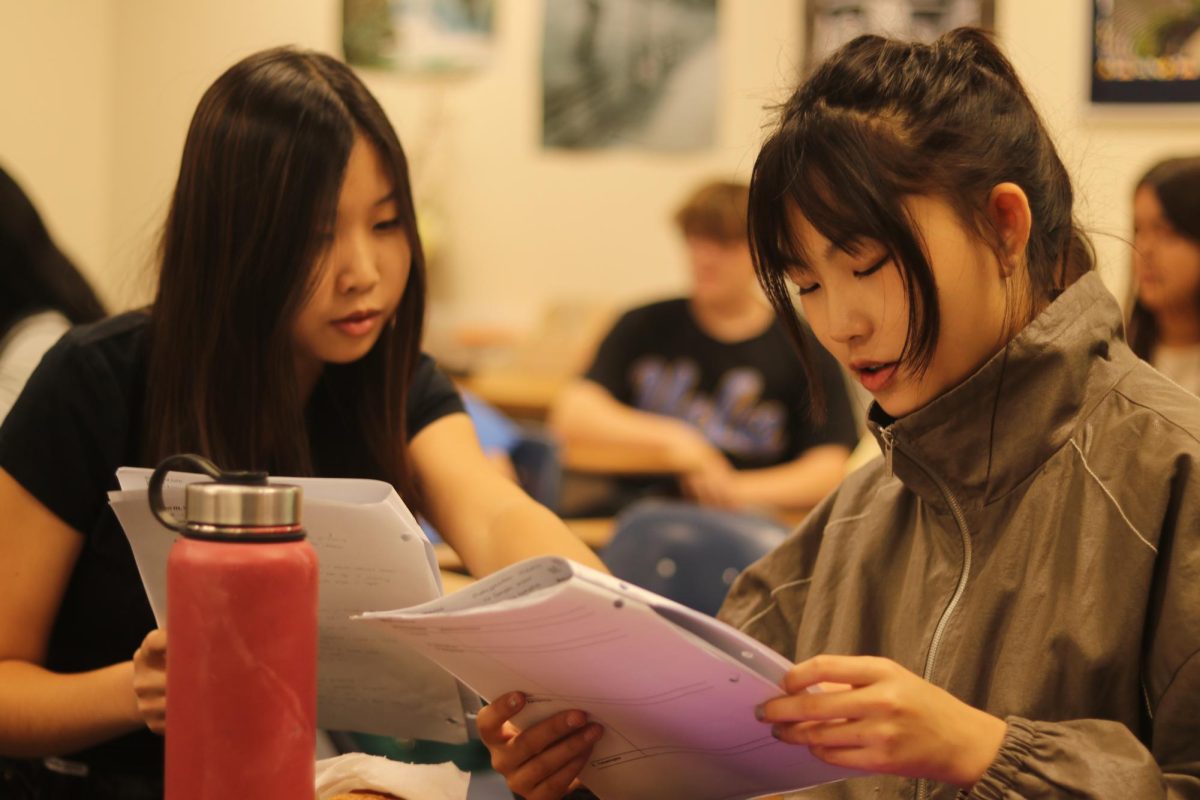
McVicar said she needed extra time to really own the meaning of her lines. “I’ve done monologues for competitions using Shakespeare, but I’ve never done a full length production of it,” she said.
For all its challenges, grasping Shakespeare’s language played only a small part in the conveying this magical story.
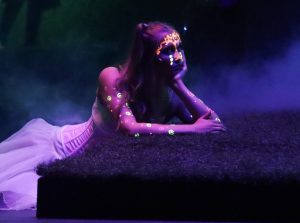
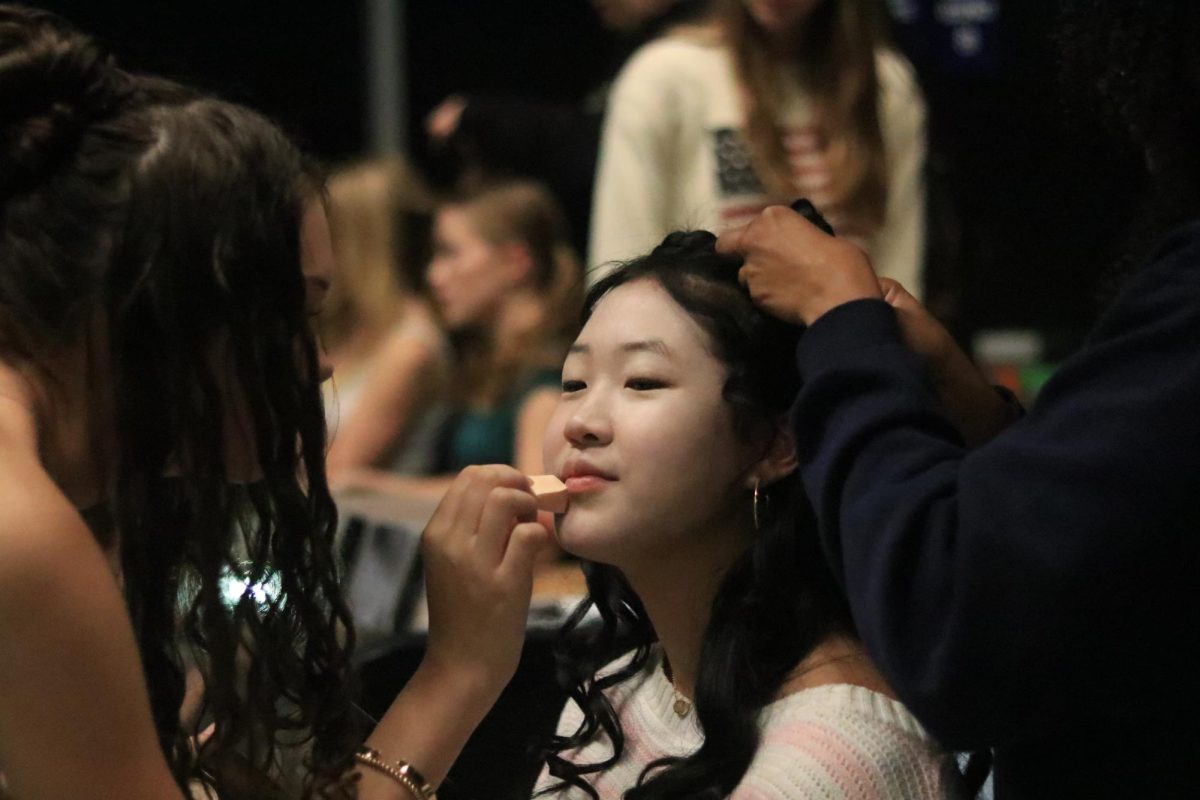
To bring the fairies to life, the makeup team uses airbrushed paints, glowing pigments, and UV-reactive highlights that shimmered under the stage’s blacklights.
Junior Emma Woods, for example, spends about 45 minutes applying makeup and glowing face paint to senior Zoe McLaughlin who plays the Fairy Queen Titania.
“The makeup team made sure every night I had the full shimmer and glow, “ McLaughlin said. “They really brought the look to life. We also found that some of the rhinestones I had at home glowed really well in the black light and we used eyelash glue to make sure they all stayed secure on our arms, necks, and faces. It added just a little extra glow to our already bright faces.”
McLaughlin says she truly admires the artistic talent of the crew. “The makeup is a little difficult to take off at times because it’s so beautiful,” she said. “I always have a rough time ruining the makeup team’s hard work.”
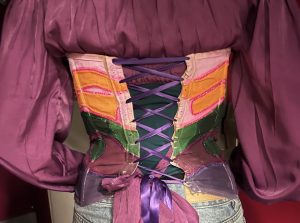
Costume designers senior Isabel Calvo and junior Kathryn Fitzgerald have spent extra time troubleshooting a few issues. They originally embellished the fairies’ costumes, including Titania’s corset, with beads. However, when the beads failed to glow during dress rehearsal they applied glow-in-the-dark paint to the corset. The paint looked awesome, but when the paint shrunk the corset’s fabric, Fitzgerald had to punch new holes in the fabric and widen the corset in the back. In other words, designing for theater means that solving one problem often creates another challenge.
“So, even the day before the show opened, we added glow-in-the-dark to every single one of their costumes,” Fitzgerald said. “And then even the day of the show, we were adding glow in the dark to make them more vibrant.”
McVicar’s so-called simple white skirt for Helena also became a challenge. In a comedic moment her character, along with her skirt, is dragged across the stage. Fitzgerald said the crew tried to fix a stubborn zipper on her skirt with safety pins. When the pins couldn’t survive the drag across the stage, Fitzgerald decided on an extreme but effective solution. Before each performance Fitzgerald sews McVicar’s skirt closed. At the end of each show, she takes a stitch remover to the costume and literally cuts out the stitches to free McVicar.
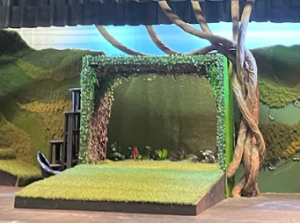
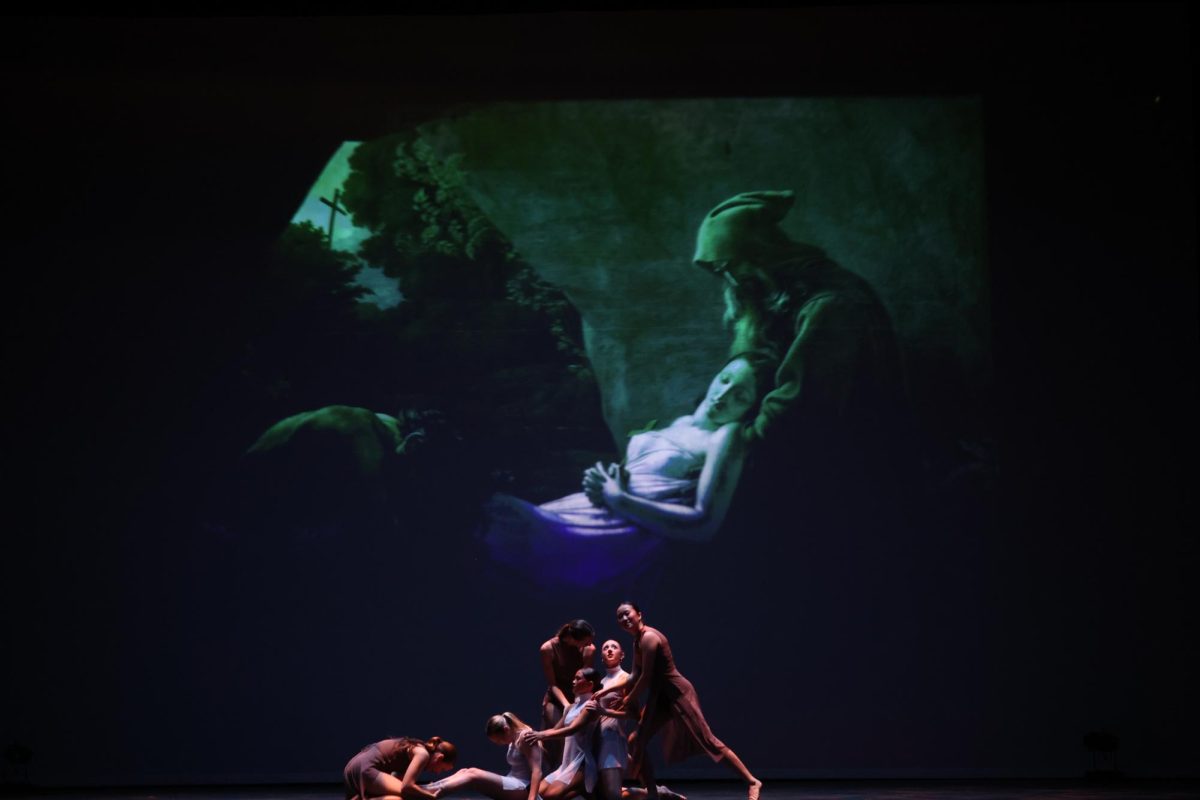
The set was built and styled by students, piece by piece. They had to create dual settings for Athens and for the forest in the same space. The team designed a drawbridge in the center stage that actors also used for entrances and exits. Stage crew member Zoe Healey described how the platforms and structures on the stage took careful planning and problem solving. “We had to attach flats and special screws and use hinges so the platform could lift and drop,” Healey said. “It took a lot of testing and adjusting, but it ended up working beautifully.”
Sophomore sound designer Gabriel Gonzalez said the crew curated music to match the contrast between Athens and the magical forest.
“For Athens, we used more classical music to give a sense of structure and confinement,” Gonzalez said. “But in the forest, everything becomes more free, so we used more techno to show that openness.”
Senior Raquel Radillo, who plays Puck, was also the lead designer for the show’s poster. Balancing both roles wasn’t easy.
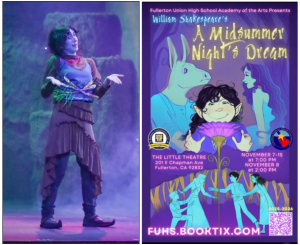
“If I wasn’t in a scene, I’d be backstage just drawing and working on the poster, so there was a lot of multitasking,” Radillo said. “When working on the poster I would be rehearsing lines in my head. This was one of my most ambitious posters. There’s so much going on in Midsummer, and I wanted to show that chaos and magic all in one image.”
The result of all this “chaos and magic” is a show full of laughter and heart, but this production also showcases something deeper—the power of collaboration.
Every piece of the show—from lights to sound to mossy green landscape—was something students made with their own hands, voices, and talent. This isn’t just a performance. It’s a full student-built creation, born from patience, teamwork and passion.
A Midsummer’s Night’s Dream closes this weekend. The final shows are Friday, Nov. 14 at 7 p.m. (sold out) and Saturday, Nov. 15 at 7 p.m. (about 10 seats available at press time). Tickets can be purchased at fuhs.booktix.com. General admission is $16. Students are $12.